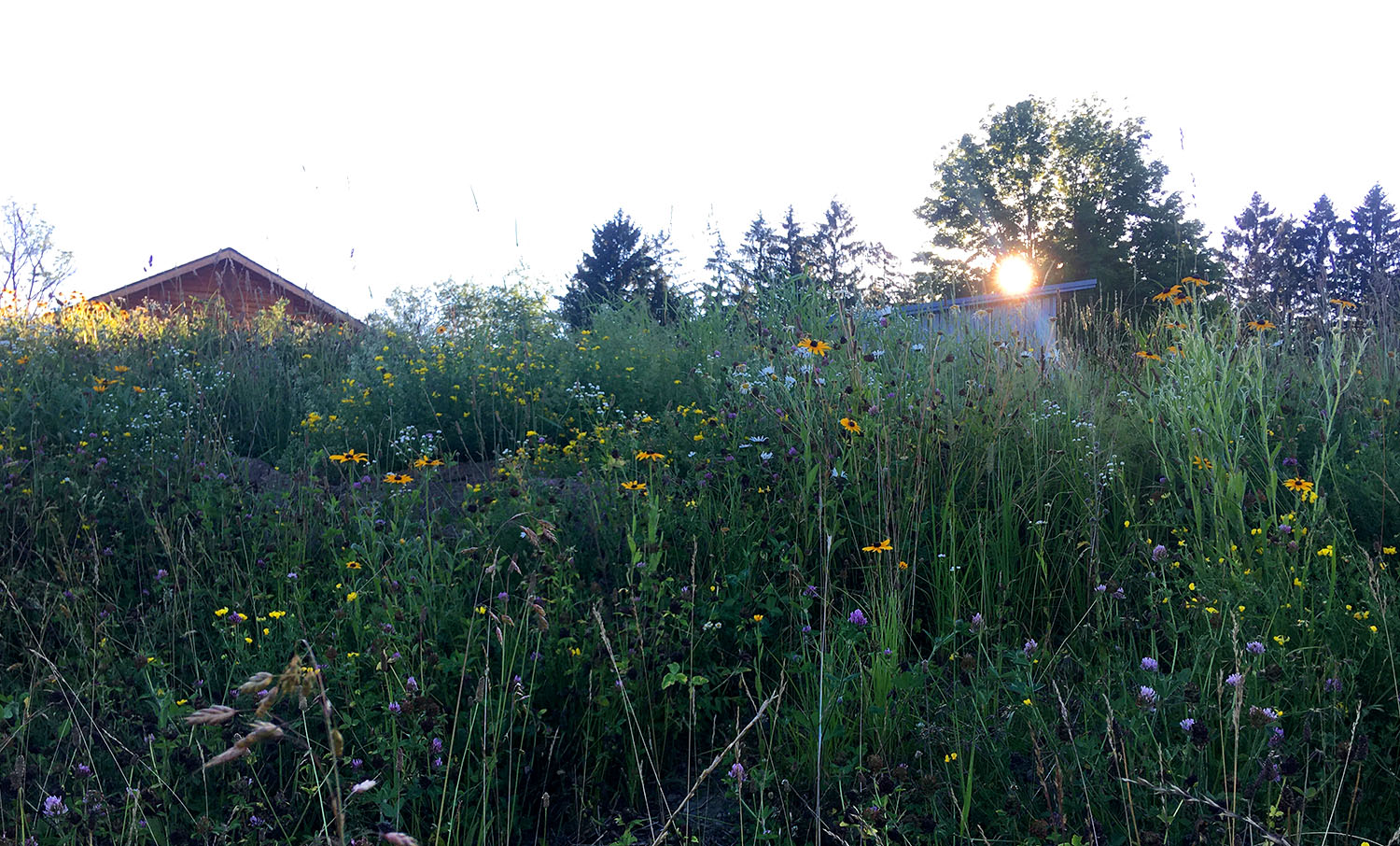
Ithaca, New York — specifically, our two acres of former hayfield
Snowy and windy, 28°F
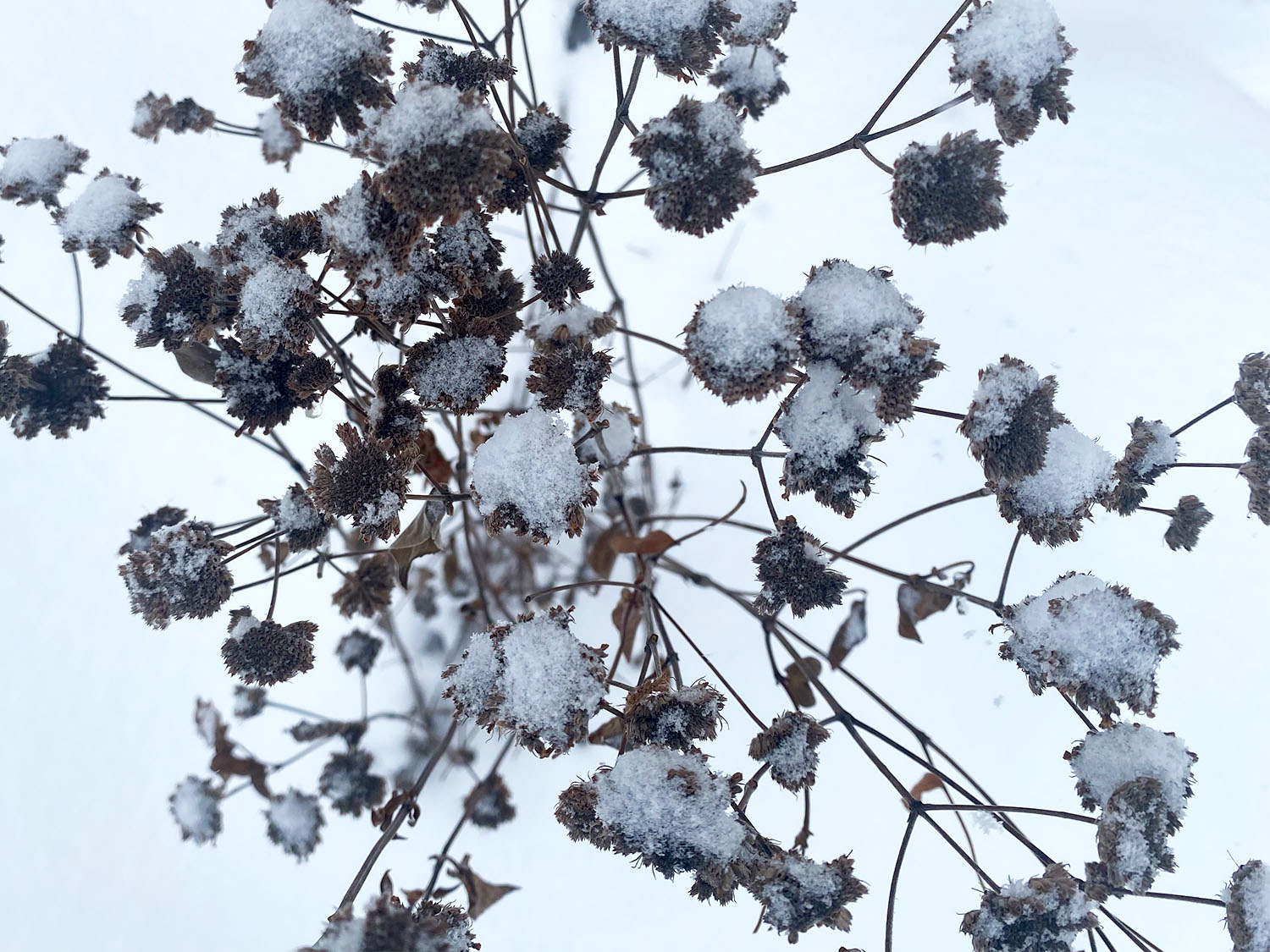
This was a challenging day to sit outside—especially for someone without full-on snow gear (i.e. me). The birds and creatures were quiet, sheltering until the snow stopped.
The overriding sounds were snow falling and wind through nearby evergreens. I was surprised by how noisy the snow actually is—tapping on my hood and on the ground as it fell and whooshing across the already fallen snow as the wind blew. A car occasionally passed on the road bordering our property.
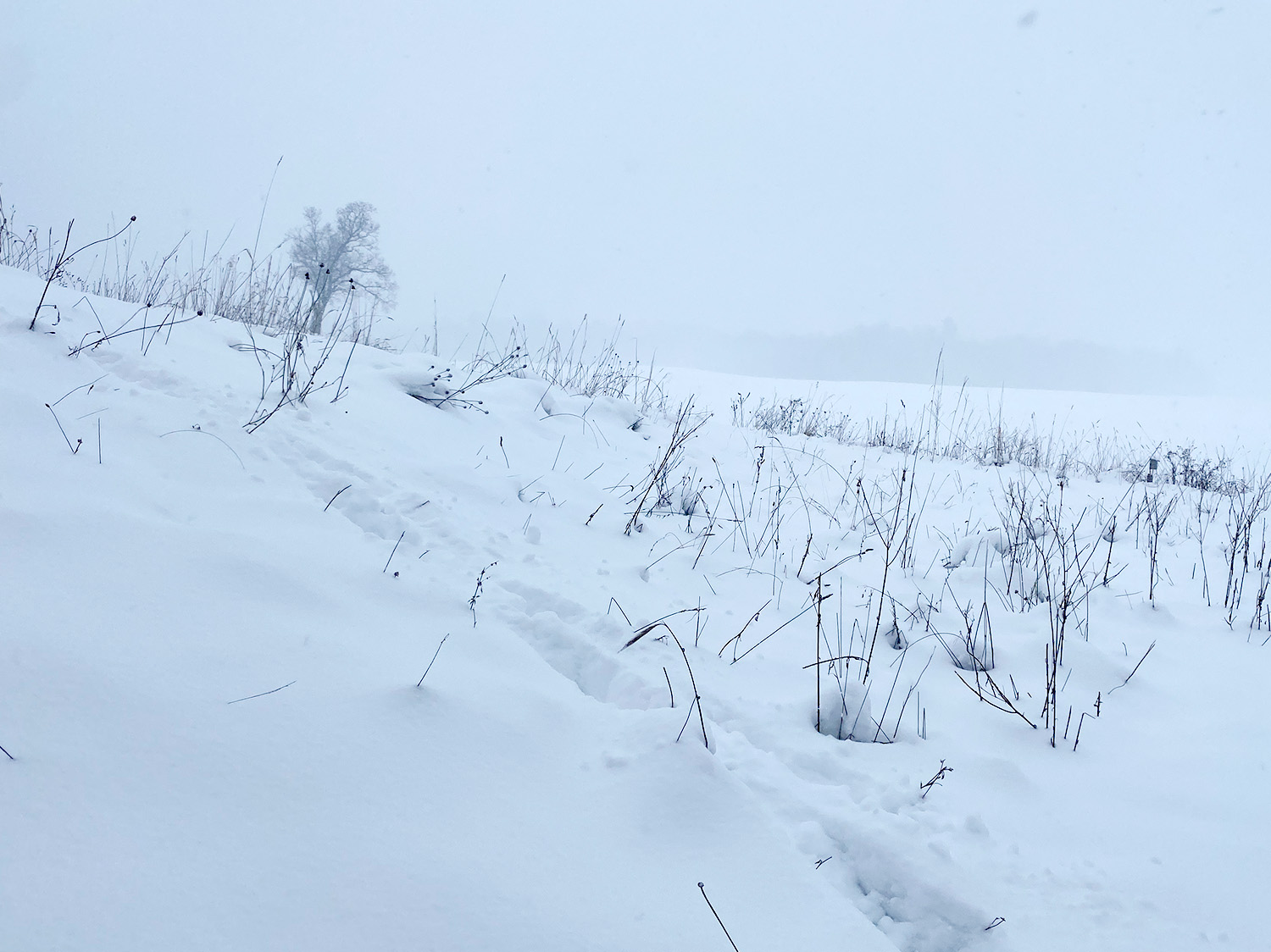
My intent for this session was simply to try out the concept of intentionally sitting and observing nature using the BCI (Be, Contemplate, Observe) method. I love to be outdoors, so I’m no stranger to appreciating the natural world, but I’ve never approached my time in nature with this level of intention. My mind had a hard time settling, especially because the natural world was so quiet—there were no birds, insects, or voles (the usual daytime suspects on our land), only snow and wind.
Aside from the snow, there wasn’t much to focus on—only the husks of grasses and perennials still standing in the meadow. (I don’t understand our culture’s obsession with mowing for many reasons, including that seedheads in winter are undeniably beautiful.) Looking at those seedheads got me wondering about how the seeds they drop in the summer and fall make it through to germinate in the spring.
Our land was formerly a hayfield. When we moved here in 2019, I started trying to reintroduce native meadow species—black-eyed susan, big bluestem, switch grass, blanket flower, milkweed, and goldenrod, to name a few. Through that process, I learned that the seeds of most meadow plants need to go through cold stratification to germinate—in other words, they need the cold and wet of winter to come alive in the spring.
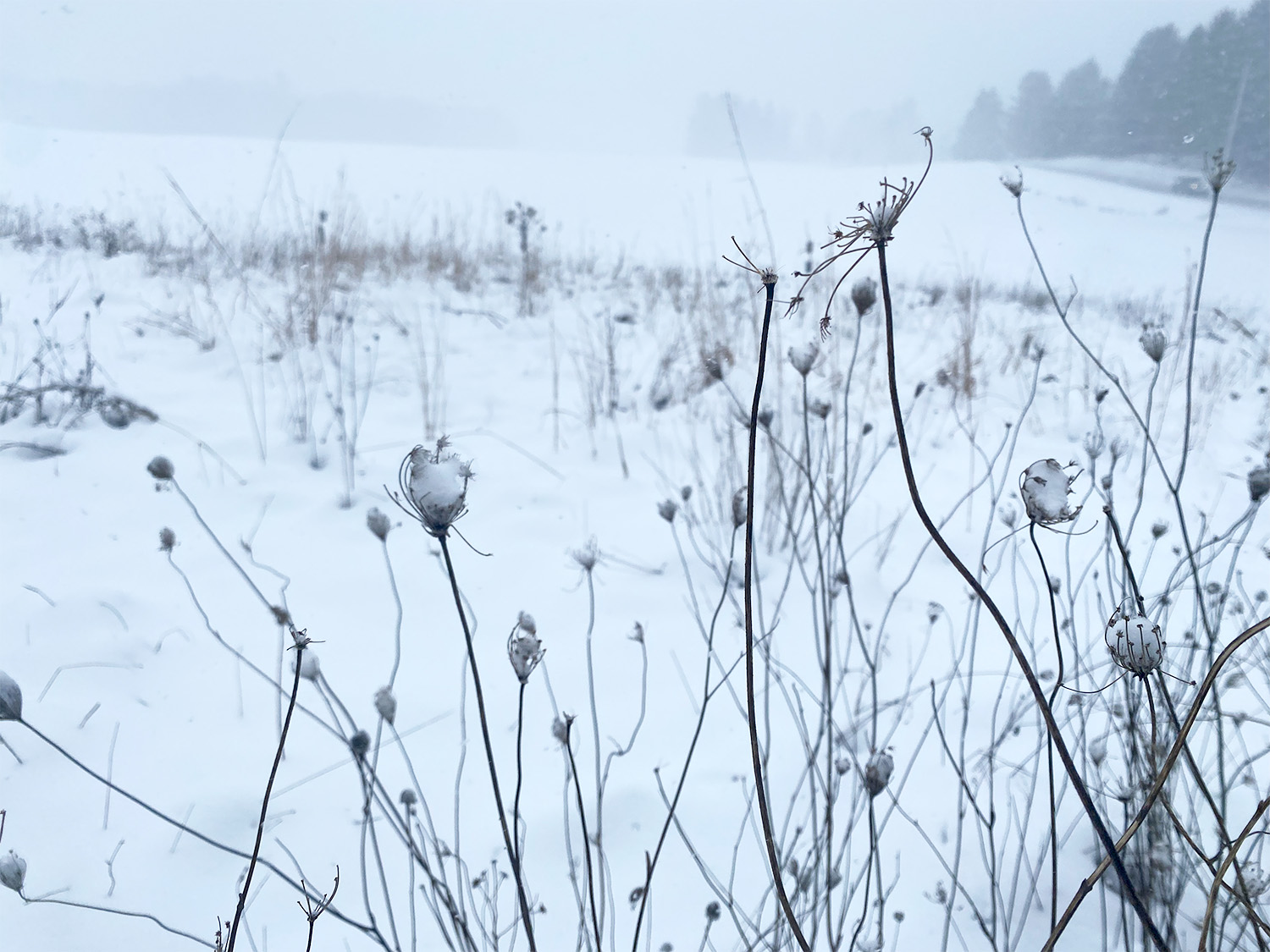
How do those seeds stay intact through the entire winter, protecting the precious genetic information they contain, until just the right moment in the spring, when they germinate and split open? According to Ohio Prairie Nursery, the supplier we bought our meadow seed from, winter conditions gradually break down the tough coat of the seed—so that when spring rolls around, the embryo inside the seed is able to break through.
I decided I needed to learn more about this. According to Smithsonian Magazine, seeds actually have “tiny ‘brains’”—clusters of cells that release hormone signals to cue germination. Pretty incredible. That also means that the seed coats need to be just tough enough to protect the seeds through the winter—but also not so tough that the seeds can’t break through in the spring.
This spring, when the meadow greens up again and starts to grow, I’ll think about those seeds, with their tiny brains and perfectly calibrated coats.