Ithaca, New York
Sunny, 60°F
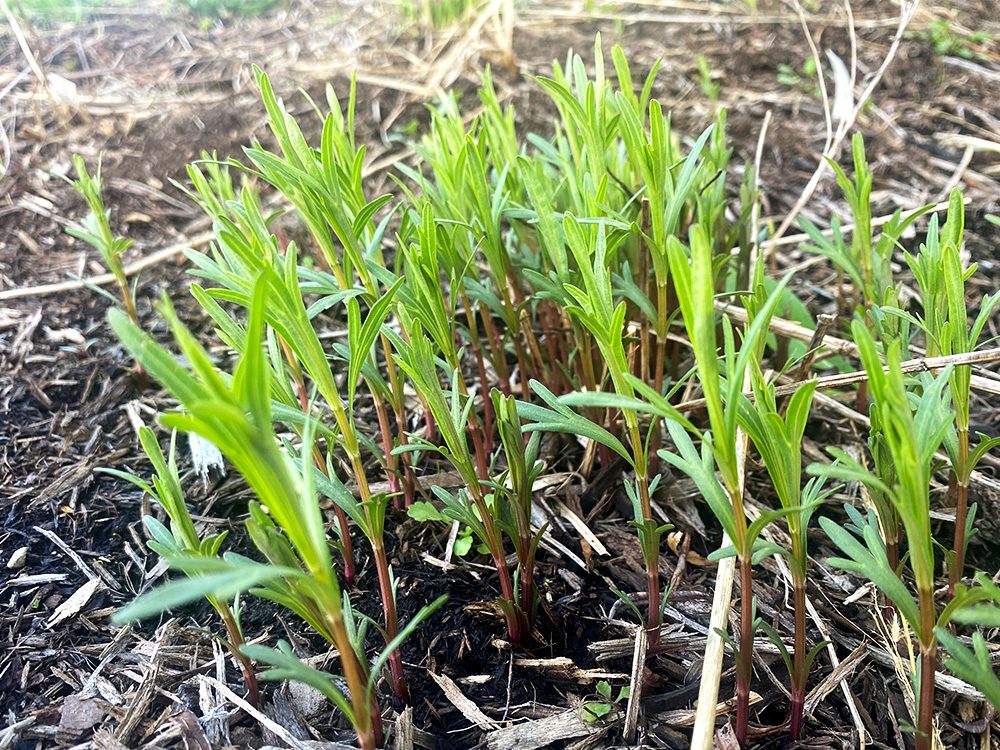
I chose to sit on our patio for this week’s BCI Session—the final session of the semester. It was a beautiful spring afternoon, with cool air and warm sun.
The perennials we’ve planted near our patio—a mix of native grasses and flowers—were breaking dormancy, some faster than others. Seeing growth after a long winter is always exciting and inspiring. I thought about how these plants are attuned to our northern climate and to the signals it sends. They cycle with the seasons, from growth to dormancy and back again.
As I sat enjoying the sunshine, it occurred to me that humans seem to have lost sight of this idea of cycles. In large part, our societies and systems push us to produce, engage, and interact with the same intensity year round. This course has been a season of growth for me—lots of energy put forth, and certainly lots of knowledge gained. Just like the plants breaking dormancy, I feel I’m entering a different season now at the end of the semester, one where I can take more time, rest, and synthesize what I’ve learned.
I’m not sure at this point how I’ll apply biomimicry in my professional work. But I can see that the key perspective I’ve gained—the instinct to ask how nature might solve a problem and to look to the natural world for inspiration—can be applied to almost any problem. That mindset is an important way to recenter and remind ourselves that we are part of nature, not separate from it. And, of course, it can yield innovate insights and solutions to the problems we’re trying to solve.
As I worked through the projects this semester, I also learned that biomimicry does not need to be a one-to-one translation of a natural strategy. I was most inspired in the moments where I was able to bring strategies or inspiration from multiple organisms together into one solution. For example, I was inspired by modularity in nature while designing a reusable food container system for our group project. But that modularity wasn’t found in just one organism—it’s a strategy used by entire swathes of the natural world, including all trees and plants. Bees and wasps also use modularity when building their hives, and they combine that strategy with the power of hexagons to create strong, efficient structures. Seeing those patterns across multiple organisms opened up a broader way of thinking, and it felt powerful to synthesize the pattern into one solution.
When I look to nature, I see communities and systems of interaction. I was reminded multiple times throughout this course that it can be incredibly difficult to innovate on your own. My husband was a (patient) sounding board throughout the semester when I needed some feedback. But I really appreciated that the group project was an opportunity to develop ideas in collaboration.
Moving forward, I would like to continue the practice of sitting quietly in nature, observing and letting ideas come (or not) as they please. And I plan to keep an open mind for opportunities to bring nature-inspired solutions into my day-to-day work. I’m excited to see where this new way of looking will lead.