Ithaca, New York—Roy H. Park Preserve
Sunny and calm, 35°F
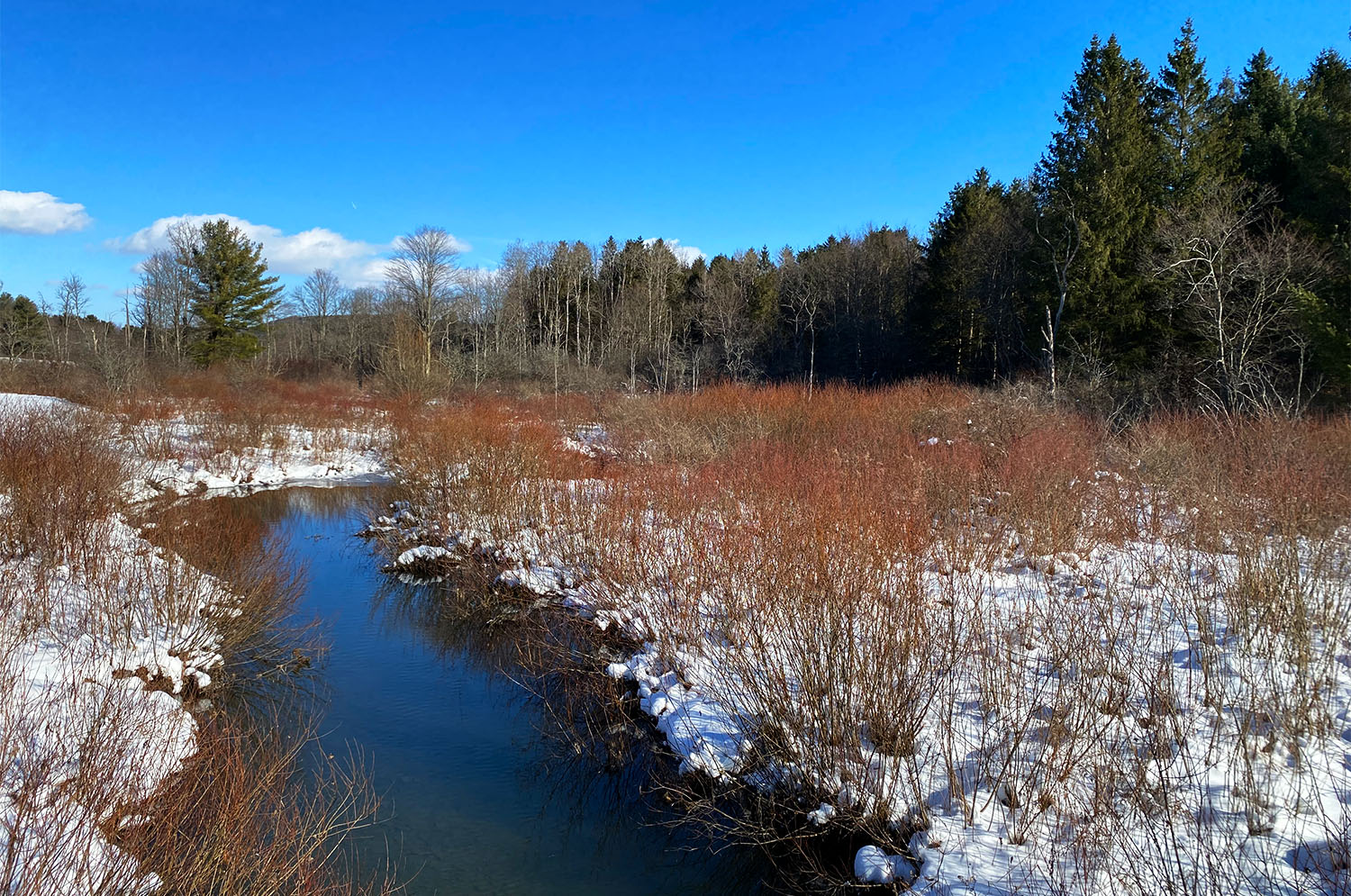
I ventured to a new spot for today’s BCI (Be, Contemplate, Imagine) session—Roy H. Park Preserve, a nature preserve not far from my home. The preserve encompasses wetlands, woods, and a section of Six Mile Creek, which is the drinking water source for the City of Ithaca. I found a seat along a boardwalk constructed over one of the main areas of wetland.
Though the morning was beautiful and sunny, there wasn’t much wildlife activity—only the distant calling of American Crows and Black-Capped Chickadees. I focused on taking in the scene around me: the trickling of water under ice, sun shining on the snow, wind rustling in dry leaves. I wondered about the animals I couldn’t see: beavers sheltered in their lodge, frogs hibernating in the water beneath me.
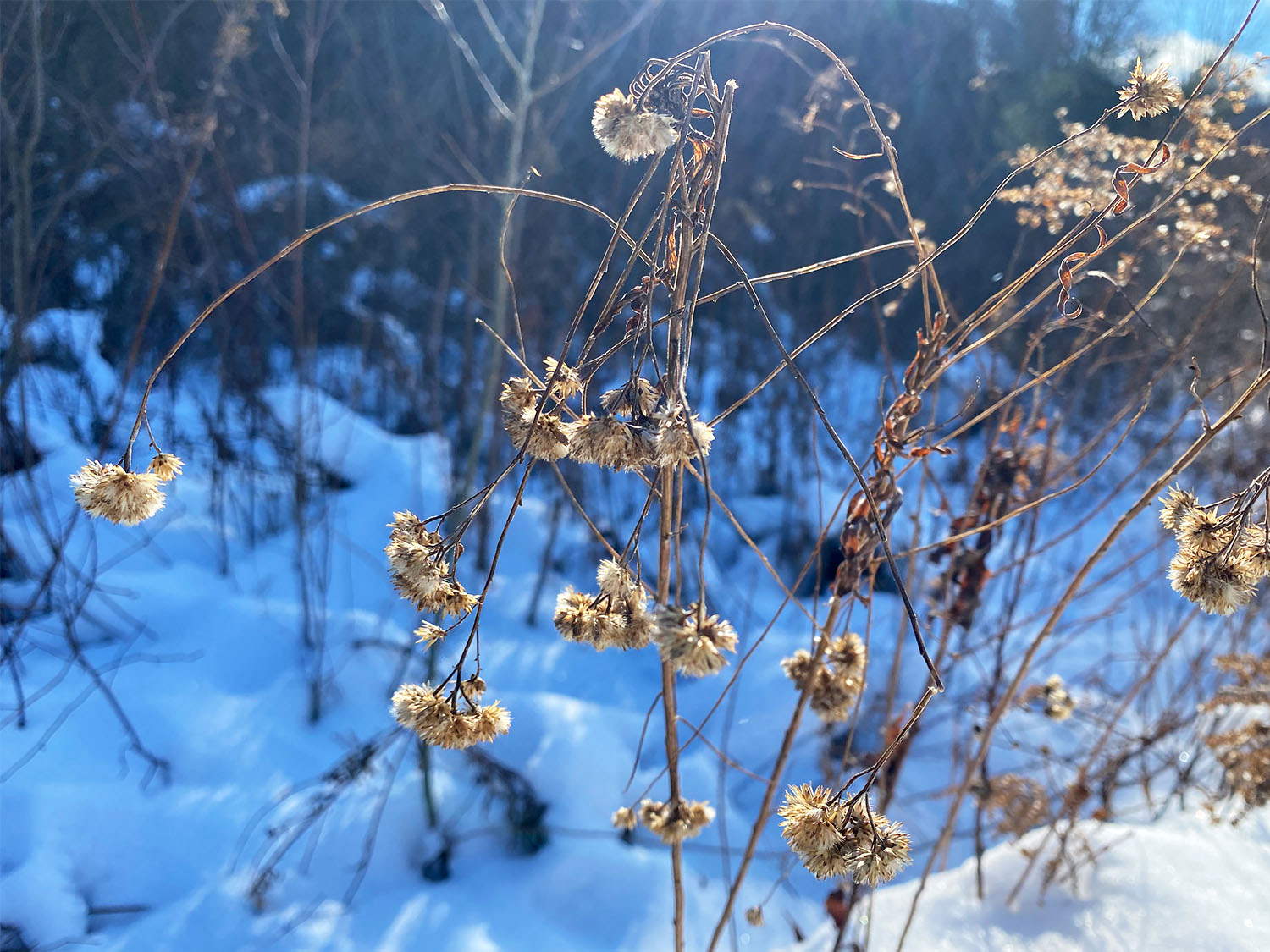
As I observed the scene, I brainstormed a list of functions:
- Roots take up water and nutrients
- Roots anchor plants in soil and prevent erosion
- Seeds protect and distribute genes
- Evergreen needles capture energy
- Snow insulates
- Bark protects
- Fallen leaves build soil
- Beaver dams regulate water flow
- Bird calls foster cooperation
- Branches support leaves, which capture energy
I was intrigued by the evergreen trees—I don’t really know why they don’t drop their leaves like deciduous trees do. I decided to ask some questions to see if I could better understand the function of their needles.
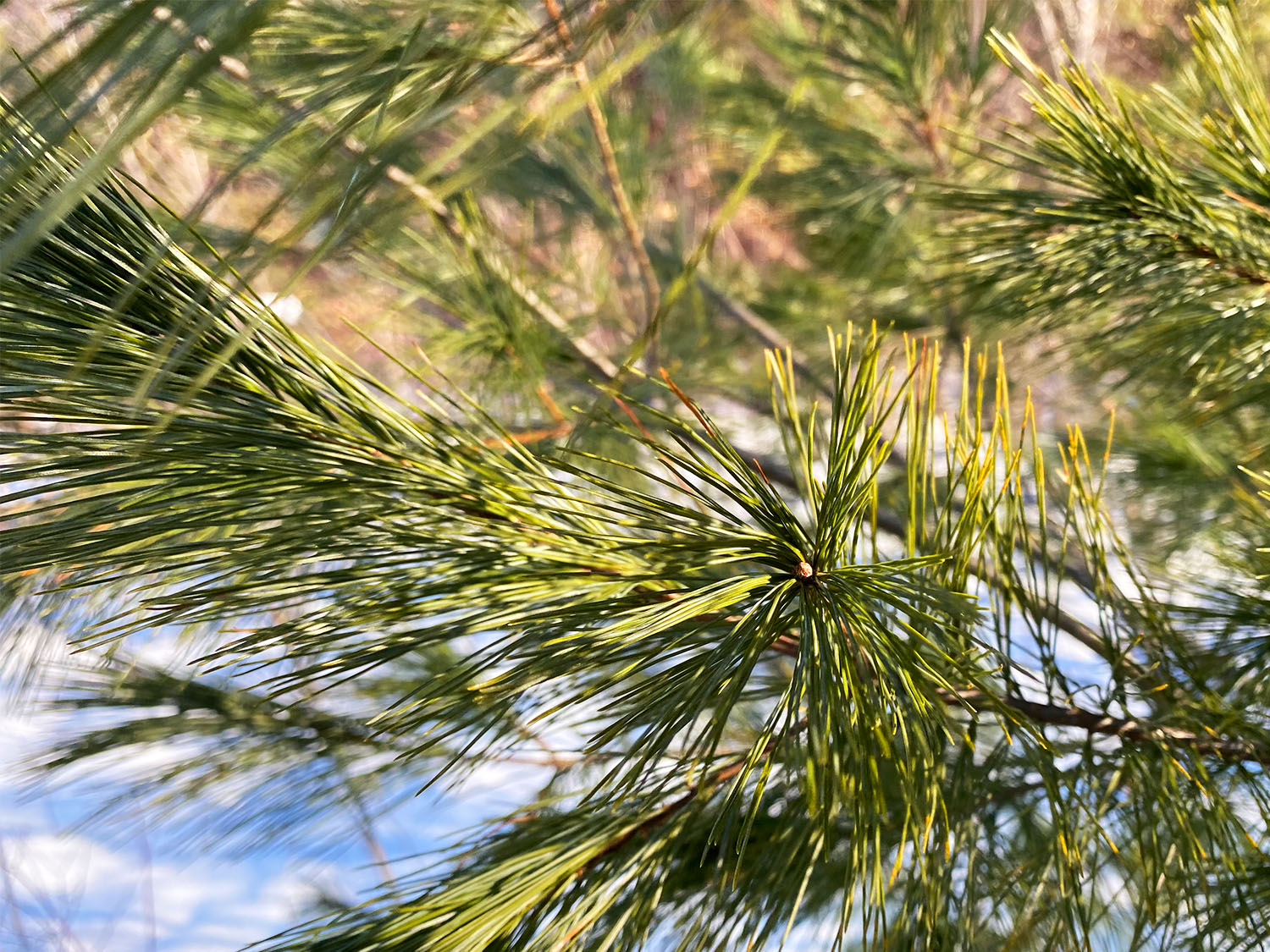
I looked more closely at a small white pine growing nearby. I asked myself: Why are these needles this shape, and why are they sort of tough and waxy? Why are they arranged this way, and why are they green? Why does the tree keep them year-round? Does the tree go dormant, like a deciduous tree?
I didn’t have the answers, but when I came home, I looked to AskNature’s Biomimicry Taxonomy to help me puzzle through the functions. I guessed that the form and material of the needles may help preserve moisture year-round (especially in cold, dry weather)—so, according to the taxonomy, they protect from wind, temperature, and loss of moisture. Of course, evergreen needles also are a key part of photosynthesis—so they also capture energy. Perhaps the trees don’t go fully dormant simply because they don’t need to, thanks to the protective structure of their needles.
That got me thinking about coatings or materials that might serve similar protective functions—and that would breakdown naturally, without creating toxins, like evergreen needles eventually do. What could that mean for food packaging? Or for plant-based alternatives to things like shoe outsoles? I’m excited to explore more.