Ithaca, New York—specifically, our two acres of former hayfield
Cloudy, 38°F
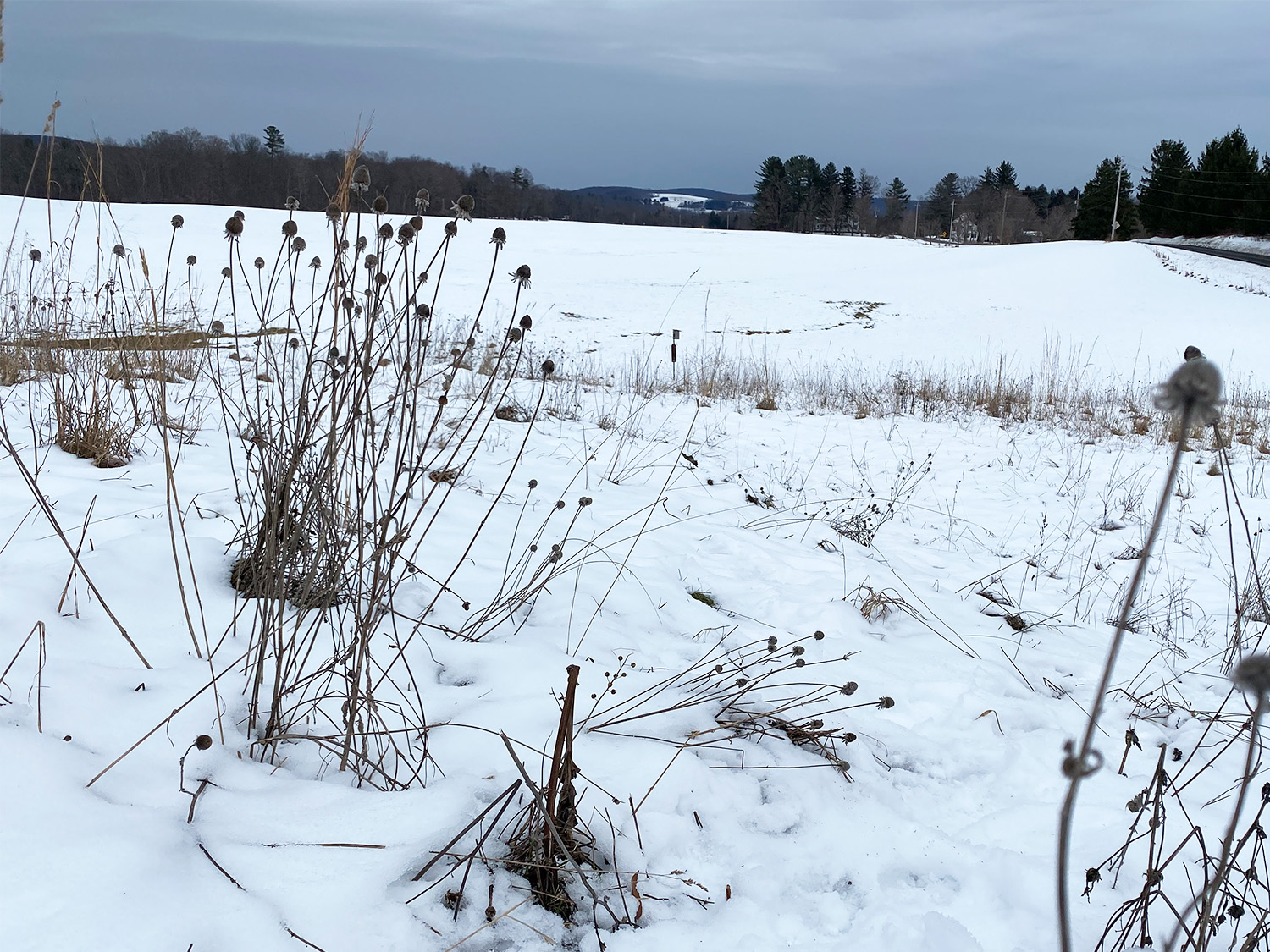
For today’s BCI (Be, Contemplate, Imagine) session, I returned to my sit spot on our land. The snow that fell earlier in the week was slowly melting, and the sky was heavy and overcast.
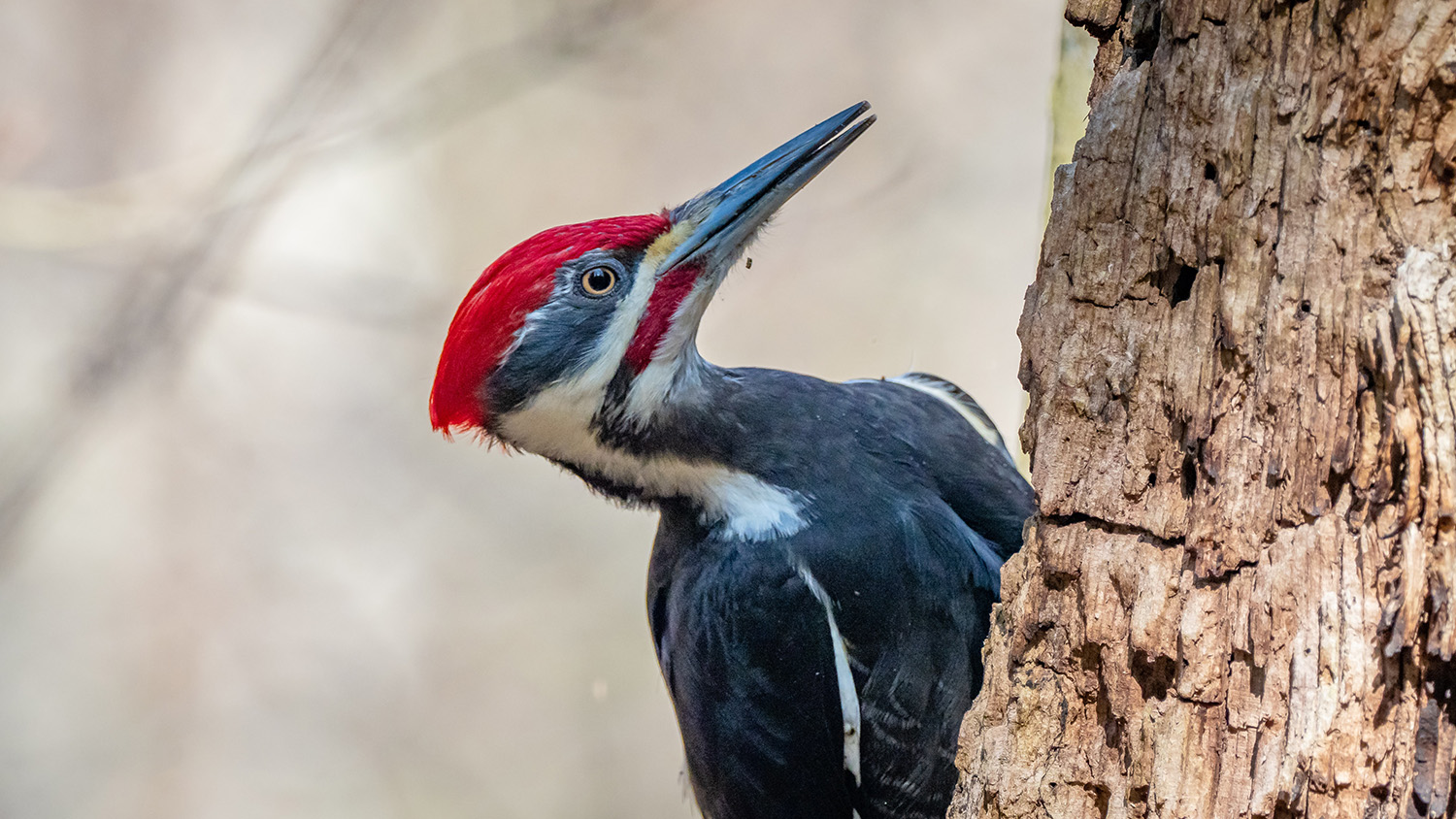
There was a bit more activity today—I could hear American Crows calling and a Pileated Woodpecker drumming—but things were still pretty quiet overall.
As I observed the scene, I brainstormed a list of systems:
- Water cycle, including aquifers and springs
- Plant life cycles
- Plants and animals in the ecosystem—trees, grasses, perennials, birds, insects, foxes, coyotes, bears, field mice, etc.—all complex systems in and of themselves
- Seasons, including hibernation and plant dormancy
- Soil nutrient cycle
- Food chain
- Decomposition

As I was writing my list, the Pileated Woodpecker continued drumming. I started to think about their relationship to trees and insects and the system that those organisms create.
I know that Pileated Woodpeckers excavate dead trees to forage for insects and to nest. And they aren’t alone—many other birds, mammals, insects, and amphibians rely upon dead trees for food and habitat. Fungi and mushrooms help break down the decaying wood and return nutrients to the soil, feeding other trees and plants. That means that Pileated Woodpeckers are just one player in a much larger, interconnected and regenerative system: the life cycle of trees and forests.
This idea of a regenerative system reminded me of the biological nutrient cycle as described in Cradle to Cradle: a cycle in which all materials flow through a closed loop, and “waste” is actually food for growth. The authors write, “Products conceived as these nutrients, such as biodegradable packaging, are designed to be used and safely returned to the environment to nourish living systems.”
In thinking about the life that dead trees support as they slowly decompose, I wondered if that model—where decay fosters life—could inspire thinking about a product’s full life cycle. Designers could consider not just the the use and disposal of a product, but also the value that the product could bring as it decomposes and returns to the nutrient cycle.
So, in other words, can we design products that will eventually become food and habitat? How can the things we create support life even as they degrade?