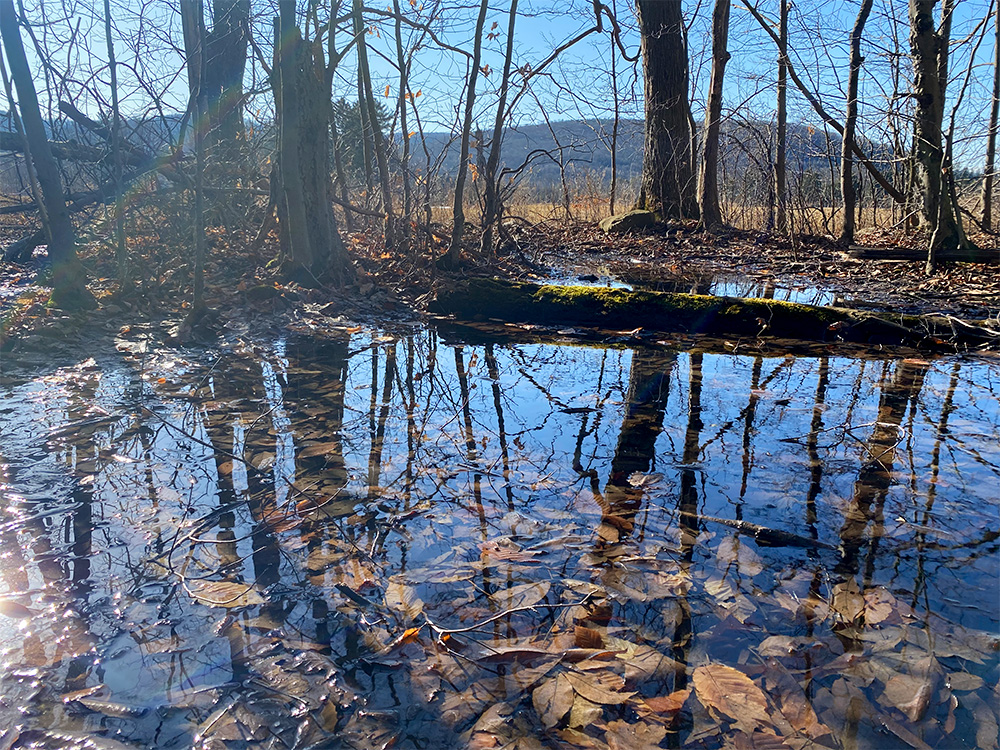
Ithaca, New York—woods near our home
Sunny and breezy, 40°F
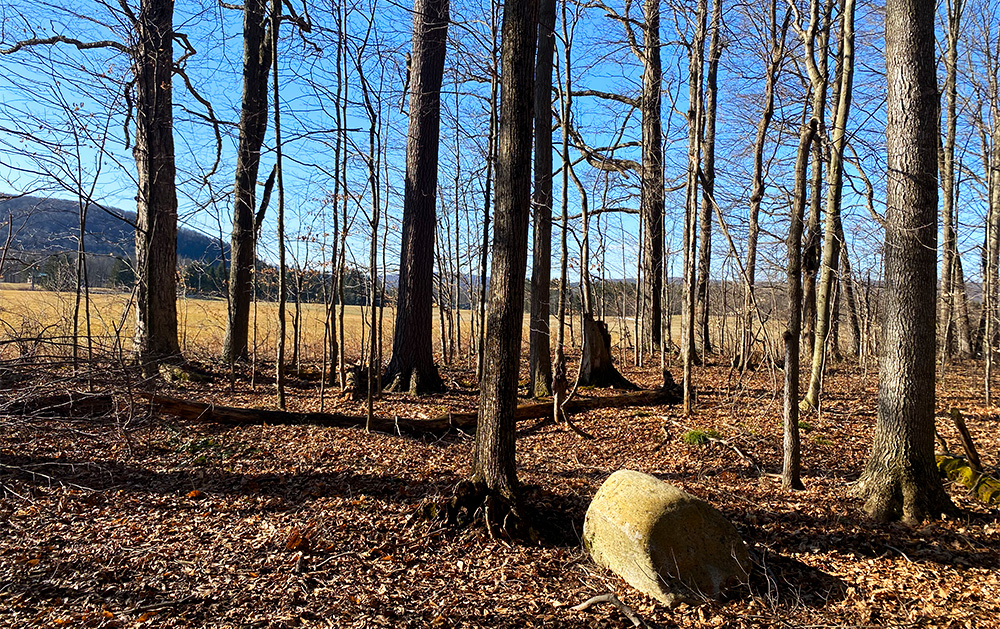
I returned to my sit spot in the woods near our home. Just like the last time I sat here, the day was unusually mild for the season. The sun was warm, and a few Tufted Titmice were singing—an early sign that winter is on its way out.
My challenge was to brainstorm a list of organisms that perform functions relevant to design challenges I plan to explore. I drew inspiration from the woods around me, imagining them at all different seasons and times of day. I also let my mind wander far beyond the woods.
- Ant colonies — coordinate to distribute resources
- Bees — efficient hives store and protect honey
- Hermit crabs — repurpose existing shells for protection and coordinate handoff of shells to other crabs
- Starlings — coordinate movement in large flocks
- Woodpeckers — structure of skull provides protection from force
- Flowers — signal to pollinators using color
- Chambered nautilus — adapts shell over time
- Honeybees — hive uses waggle dance to coordinate activity
- Mycorrhizal fungi — distribute resources via underground network
- Woodpeckers — create hollows in dead wood to nest (protect young)
- Pine cones — protect seeds from moisture and temperature, break down in environment
- Seed coat (e.g. milkweed) — protects seeds from moisture and temperature, breaks down in environment
- Paper wasps — build nests from abundant and life-friendly materials
- Decomposers (fungi, bacteria, invertebrates) — break down natural materials
- Birds’ eggs — lightweight shells protect developing chick, then break down
- Feathers — barbs allow feathers to stick together and stay in place
- Edible plants — send signals that fruit is ready to eat
- Evergreen trees — waxy coating protects needles from temperature and loss of liquids
- Apple trees — thin skin protects fruit and seeds
- Paper wasps — saliva creates water-resistant material
- Euphorbias — waxy coating prevents evaporation in hot and/or dry conditions
- Monarch chrysalis — protects caterpillar during process of metamorphosis
- Acorns — shell protects seed
- Algae — cuticle provides protection against moisture loss
- Tree bark— protects from insect damage
- Snails — shell provides protection from predators
- Invertebrates — exoskeleton provides protection and structure
- Marigolds — limonene deters insects
- Paper wasps — parallel fibers in nests create strong, lightweight material
- Spiders — spin lightweight but strong silk to form webs