Ithaca, New York—woods near our home
Sunny and breezy, 45°F
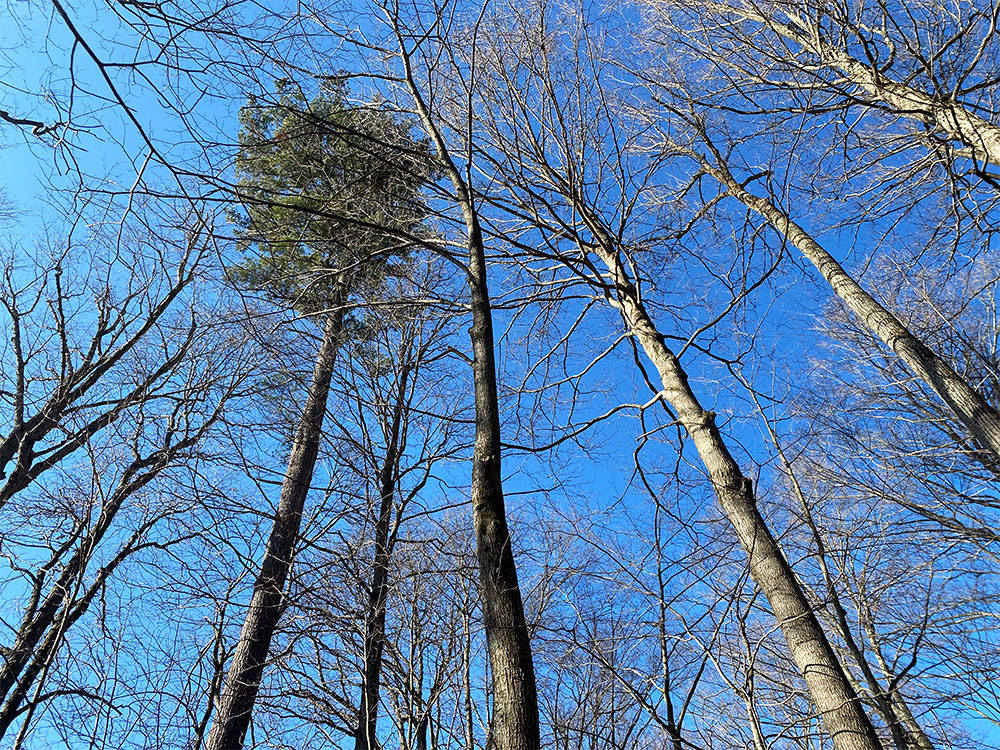
I ventured into some woods near our home for today’s BCI (Be, Contemplate, Imagine) session. It was a beautiful, sunny, and mild day—one that felt like it belonged in April, not February. I brought a notebook with me and found a seat on boulder at the base of a lone white pine.
It was late morning, and the woods were mostly quiet. Wind gusts bent the trees and rustled the few remaining leaves on their branches. I was visited by a Red-Tailed Hawk, who perched on a nearby tree at the edge of the woods, scanning the field beyond. I found an owl pellet at the base of the white pine, and I imagined a Barred Owl huddled near the top of the tree, dozing through the day.
After observing the scene, I started to think about all of the functions that surrounded me. I was especially interested in the trees and the ways that their leaves, bark, and roots help them thrive. I brainstormed some functions—roots anchor trees against wind, flexible branches are resilient to strong forces, leaves drop in the fall to support dormancy and grow again in the spring to gather energy, outer bark protects the living inner wood.
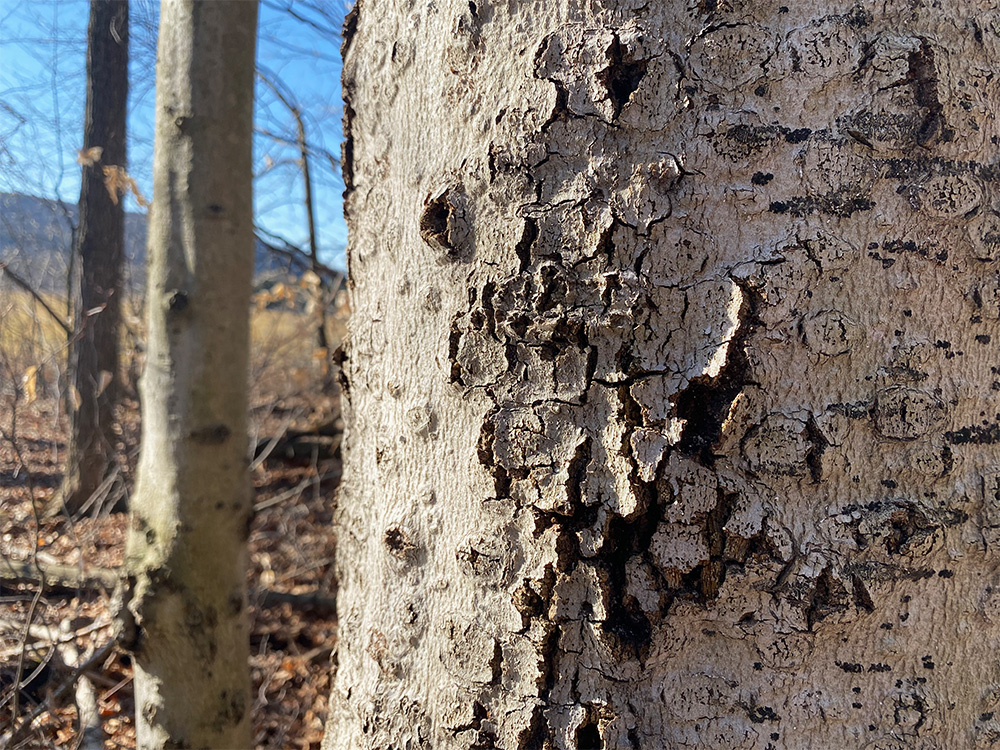
When I got back home, I turned to the internet for some answers. I learned that bark performs many protective functions: According to the U.S. Forest Service, it insulates trees from cold and heat, protects from insects, and keeps excess moisture out and needed moisture in. Bark is also continually regenerated by the tree and is able to heal after disturbance.
AskNature provides even more insight into bark’s protective abilities—specifically, its ability to keep trees cool even in direct sunlight. This is partially thanks to the tannins found in bark, but its structure also plays a role. Rough, furrowed bark creates many cooler, shadowed areas on the tree's surface. Papery, peeling bark creates pockets of insulated air around the tree.
I wondered what this could mean for building cladding. Could cladding that has the texture of furrowed bark keep a building cooler in a hot, sunny climate and reduce the need for air conditioning? Or, in cold climates, could cladding that creates an insulated layer of air around the building help reduce heating inputs, like the peeling bark of a birch tree protects from extreme temperature? Of course, the cladding would also need to protect the building from moisture—and, ideally, would be resilient to damage and easy to repair.